Abstract
Reservoir Computing (RC) has emerged as a robust computational paradigm, particularly effective for processing temporal or sequential data [1]. Leveraging the dynamics of recurrent neural networks, RC simplifies the learning process, making it suitable for edge computing [2] and real-time applications for various material systems [3] [4] [5] [6]. Recent advancements have seen the integration of memristor technology into RC, with Ionic Memristor-based Reservoir Computing (Ionic MRC) standing out due to its unique properties in biocompatibility. This review delves into the fundamentals of RC, the evolution and advantages of memristor-based RC, and the significant potential of Ionic MRC in various applications.
Introduction
Neuromorphic devices, inspired by the architecture and functionality of the human brain, represent a significant shift from traditional von Neumann computing architectures. In von Neumann systems, data storage and processing occur separately, leading to inefficiencies in real-time processing, especially for large datasets. Neuromorphic systems, in contrast, offer real-time processing capabilities, low power consumption, and the ability to handle large data sizes efficiently.
Neuromorphic devices encompass a diverse range of hardware platforms, such as organoids [7], memcapacitors [8] , photonic modules [9] [10] [11] , silicon-based hardware [12] and emerging memory devices [13] [14] [15]. Organoids, formed from stem cells, replicate essential features of brain architecture and function. These miniaturized brain-like structures facilitate the creation of “Brainoware,” which performs computation by mimicking neuronal network dynamics through the organization of neurons and synaptic connections [7]. Memcapacitors integrate memory and capacitance properties, enabling the emulation of synaptic plasticity and the storage of information through dynamic electrical characteristics [8]. Photonic modules utilize light for computation, offering high-speed data processing capabilities with low power consumption, exploiting the parallelism and bandwidth of optical signals for complex tasks [9] [10] [11]. Silicon-based hardware, compatible with complementary metal–oxide–semiconductor (CMOS) technology, requires complex designs involving multiple devices to emulate neuronal functions, resulting in increased design complexity and energy consumption [12]. In contrast, emerging memory devices like memristors offer a more efficient alternative by allowing information storage and processing within a single device [16] [17]. This capability enables the simulation of complex neural processes like multi-level responses, dendritic integration, and event-based data processing, mimicking the dynamic characteristics of biological synapses [18].
Ionic neuromorphic devices are particularly promising for mimicking the sensory and computational systems of living organisms, which rely on ion activity [16]. Ionic neuromorphic devices leverage ionic transport mechanisms to perform functions similar to synapses and neurons. Ionic devices can be classified into two main types: two-terminal devices, such as ion memristors, and three-terminal devices like electrolyte-gated transistors (EGTs) [19]. Ion memristors, for instance, utilize redox processes to modulate resistance, enabling them to mimic synaptic plasticity. In these devices, the migration of metal ions under an electric field can create or dissolve conductive filaments, altering the device’s resistance state [20]. This characteristic allows them to emulate both short-term and long-term plasticity found in biological systems. Three-terminal devices, like EGTs, offer more precise control over conductivity modulation through an external gate terminal [20]. These devices can form highly interconnected neural networks, crucial for implementing complex neuromorphic systems. Moreover, the separation of input and output paths in these devices reduces interference, enhancing the design of multi-input systems.
A significant aspect of neuromorphic computing, including the use of ionic neuromorphic devices, is the adoption of Reservoir Computing (RC). RC is a powerful computational paradigm that simplifies the learning process by utilizing a dynamic reservoir to transform inputs into high-dimensional representations. This method is especially advantageous in addressing challenges like catastrophic forgetting, where new data interferes with previously learned information in traditional neural networks [21]. RC’s architecture, which leverages a fixed, randomly interconnected network (the reservoir), is particularly well-suited for physical implementations, including memristor and ionic-based devices.
For ionic neuromorphic devices, the RC approach is not only well-matched but also one of the most feasible methods to implement. The non-linear and memory-retentive properties of ionic devices make them ideal candidates for creating reservoirs that can efficiently handle temporal data and complex signal processing tasks. This synergy enhances the potential of ionic memristor-based RC systems to revolutionize neuromorphic computing, offering new pathways for the development of efficient, adaptive, and scalable computational architectures. Ionic memristor-based RC has become a valuable tool to handle temporal signal processing [8] [14], motion recognition [8] [22] and analyzing nonlinear dynamics or chaotic systems [8,15].
Reservoir Computing
Reservoir Computing (RC) simplifies Recurrent Neural Networks (RNNs) by utilizing a fixed, randomly interconnected network, termed the reservoir. The reservoir acts as a dynamic processor for input signals, projecting them into a high-dimensional space where temporal patterns are easier to analyze. This approach simplifies training to adjusting the readout weights, which linearly transform the reservoir’s state into the desired output. RC has demonstrated substantial reductions in the computational cost of learning, making it a promising solution for developing edge devices for temporal pattern classification, prediction, and generation[23].
RC is derived from the principles of Recurrent Neural Networks (RNNs), independently conceptualized through Echo State Networks (ESN) by Jaeger [1] [24] and Liquid State Machines (LSM) by Maass [25]. The Echo State Network (ESN), which represents a generalization of the RC framework to tree-structured data, is characterized by their ‘echo state’ property, which ensures that the network state is uniquely determined by past inputs, making them powerful tools for modeling memory in time series [24]. The Liquid State Machine (LSM), which employs spiking neurons to create a liquid or reservoir, is particularly adept at processing time-varying patterns, due to its ability to preserve the temporal structure of the inputs within the high-dimensional state space of the reservoir [25].
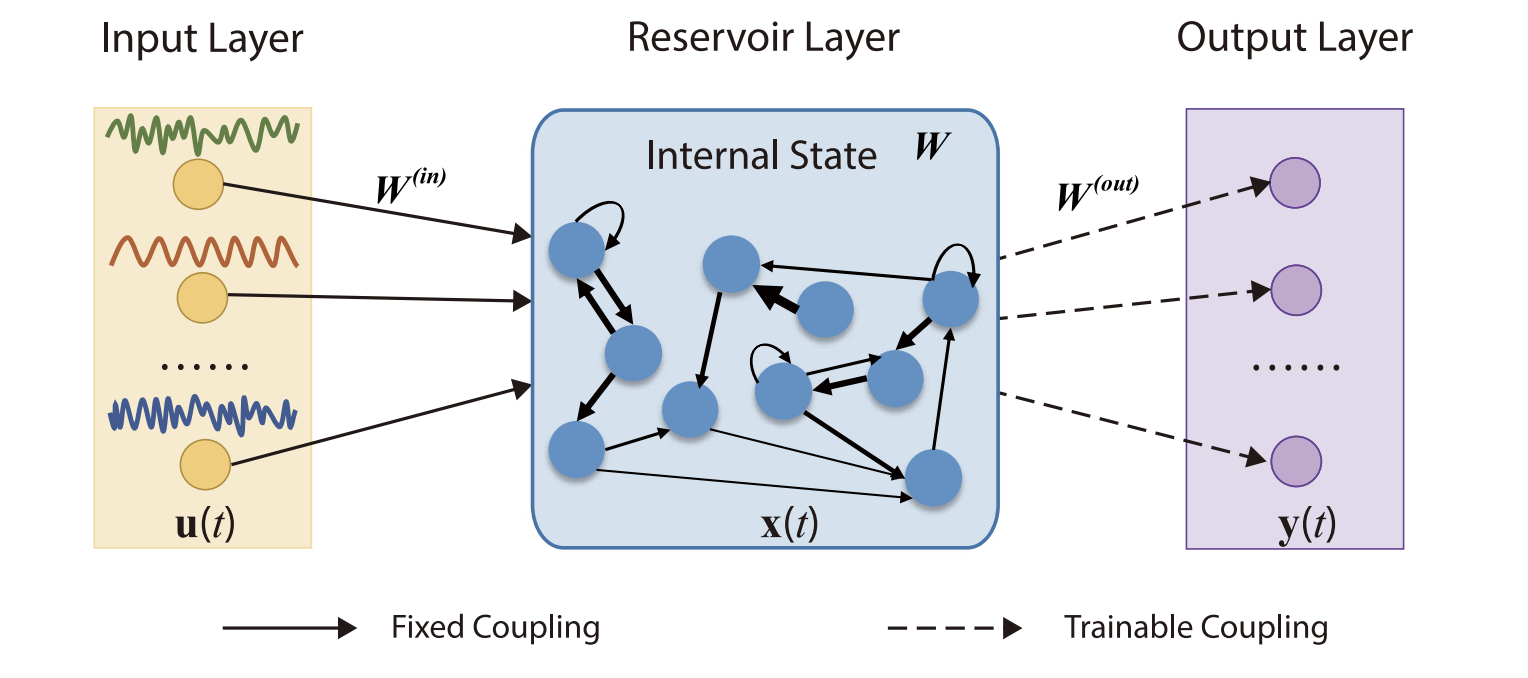
Figure 1. Principle of Reservoir Computing [26]
The foundational models utilize a non-linear, high-dimensional system and simplify the computational process to primarily train a simple readout layer to interpret the reservoir’s state for output generation. Here we take ESNs as an example.
ESNs are a prominent implementation of RC, characterized by their ability to maintain the “echo” of input signals through their dynamic reservoir states. The architecture of an ESN comprises three main components. Input Layer receives external input signals and maps them into the reservoir. The input weight matrix ($W_{in}$) determines the influence of the input signals on the reservoir states. The reservoir layer is a high-dimensional, dynamic system of recurrently connected nodes. These nodes interact in a non-linear fashion, creating a rich set of dynamics that transform the input signals into a higher-dimensional space. The internal connections are defined by the recurrent weight matrix ($W$). The output layer produces the desired output by linearly combining the states of the reservoir nodes. The output weights ($W_{out}$) are the only parameters adjusted during training, simplifying the learning process.
The state of the reservoir is updated at each time step according to the following state update equation:
$$ x(n + 1) = f(W_{in}u(n + 1) + Wx(n) + W_{back}y(n)) $$
where:
- $x(n)$ is the state vector of the reservoir at time step $n$.
- $u(n)$ is the input vector at time step $n$.
- $W_{in}$ is the input weight matrix.
- $W$ is the recurrent weight matrix of the reservoir.
- $W_{back}$ is the feedback weight matrix, if output feedback is used.
- $f$ is the activation function, typically a sigmoid or hyperbolic tangent.
The output of the ESN is computed as:
$$ y(n + 1) = f_{out}(W_{out}[u(n + 1), x(n + 1), y(n)]) $$
where:
- $y(n + 1)$ is the output vector at time step $n + 1$.
- $W_{out}$is the output weight matrix.
- $f_{out}$ is the output activation function.
The output layer uses the current input, the updated reservoir state, and optionally, the previous output to generate the new output.
The echo state property ensures that the reservoir’s state is uniquely determined by the input history, meaning that the influence of initial conditions vanishes over time. Formally, for a network with no output feedback: $x(n) = E(u(n), u(n - 1), \ldots)$, where $E$ is a function mapping the input history to the reservoir state. This property is crucial for the stability and predictability of the ESN. Training an ESN involves adjusting only the output weights ($W_{out}$) through a linear regression task to minimize the error between the predicted outputs and the actual target outputs. The objective function for training is $\min_{W_{out}}\sum_n (y_{teach}(n) - y(n))^2$, where $y_{teach}(n)$ is the target output at time step $n$.
The field of RC has evolved over time to include various forms such as 3D-integrated multilayered physical reservoir array, Deep Reservoir Computing and Quantum Reservoir Computing. Deep Reservoir Computing extends the RC framework towards deep learning, drawing inspiration from the complex neural pathways found in the brain, enabling hierarchical processing of temporal data and exploring the role of layered composition in recurrent neural networks [27] [28]. On the other hand, Quantum Reservoir Computing leverages the nonlinear nature of quantum mechanical interactions to form reservoirs and represents an emerging field that combines machine learning with quantum devices, leading to new research in quantum neuromorphic computing [29].
Memristor-based Reservoir Computing (MRC)
Memristor-based reservoir computing (MRC) represents an innovative extension of the reservoir computing (RC) paradigm by incorporating memristors into the reservoir. Memristors, as two-terminal devices with resistance that varies based on the history of applied voltage and current, are particularly suited for mimicking the synaptic functions found in neural networks. This property, combined with their inherent non-linearity and memory retention capabilities, makes them ideal for constructing high-dimensional dynamic reservoirs crucial for various computing applications.
One of the primary advantages of MRC is its low power consumption while maintaining high efficiency in temporal signal processing tasks [14]. Unlike traditional CMOS-based systems, MRC systems can operate with significantly reduced energy requirements, making them ideal for battery-powered and energy-efficient devices. For instance, dynamic memristors have demonstrated low energy consumption while maintaining high efficiency in temporal signal processing tasks [14]. In the context of increasing emphasis on energy efficiency, the deployment of memristors in RC systems offers a sustainable solution for various computing applications. Additionally, the non-volatility of some memristors allows them to retain their state without continuous power, reducing the energy needed for data storage. This feature not only conserves energy but also ensures data persistence during power outages [30] [31], which is particularly beneficial for applications requiring reliable long-term data retention, such as neuromorphic computing and storage systems [32] [2].
Another strength of MRC is its scalability, which is particularly advantageous for the development of compact and efficient computing systems, which are crucial for modern applications in edge computing and the Internet of Things (IoT). These devices can be fabricated at a nanoscale, enabling high-density integration and 3D arrays [33]. The ability to integrate a large number of memristors into a small area without compromising functionality is a critical factor in advancing RC technologies [34].
To ionic memristors, their biocompatibility and low Young’s modulus opens new avenues for integrating these devices into bio-compatible systems and medical applications. This feature is particularly promising for interfacing electronic devices with biological systems, potentially revolutionizing fields such as medical diagnostics and treatment. For example, future applications of ionic memristors could use sodium ions, potassium ions or calcium ions to contact soft tissues, like neurons or muscle cells, to record or control directly by ions but electrical stimulation.
The enhanced dynamic capabilities of ionic memristors make MRC particularly suitable for tasks requiring temporal processing.
Speech Recognition. MRC systems can significantly improve the performance of RC in speech recognition tasks. By leveraging the complex dynamics of ionic transport mechanisms, these systems can more accurately model and interpret the temporal patterns in spoken language, leading to higher accuracy in speech recognition applications.[35] [6] [36]
Finger Motion Recognition and Handwritten Digit Recognition. The enhanced dynamic behavior of ionic memristors is particularly beneficial for recognizing complex finger motions or MNIST images [37] [37]. By accurately modeling the intricate temporal patterns associated with finger movements on hand, ionic MRC systems can provide following precise and responsive motion recognition, which is critical for applications in prosthetics and human-computer interaction [18]. The ability of Ionic MRC systems to process time-series data effectively also makes them suitable for tasks such as handwritten digit recognition. These systems can capture and interpret the dynamic patterns in handwritten inputs, providing robust and accurate recognition capabilities.
Biological Signal Monitoring. The use of ionic memristors in IMRC systems presents a promising solution for real-time biosignal monitoring and pattern recognition. This has been demonstrated by classifying four classes of arrhythmic heartbeats with an accuracy of 88% [38] and identification of epilepsy-related neural signals with an accuracy of 93.46% [39]. The biocompatible nature of these systems allows for seamless integration with body fluids and biological tissues, paving the way for ultra-low-power consumption hardware-based artificial neural networks. This capability is crucial for early detection of malign patterns in patients’ biological signals, which can save millions of lives by enabling real-time clinical applications beyond offline evaluations.
System Implementation and Performance
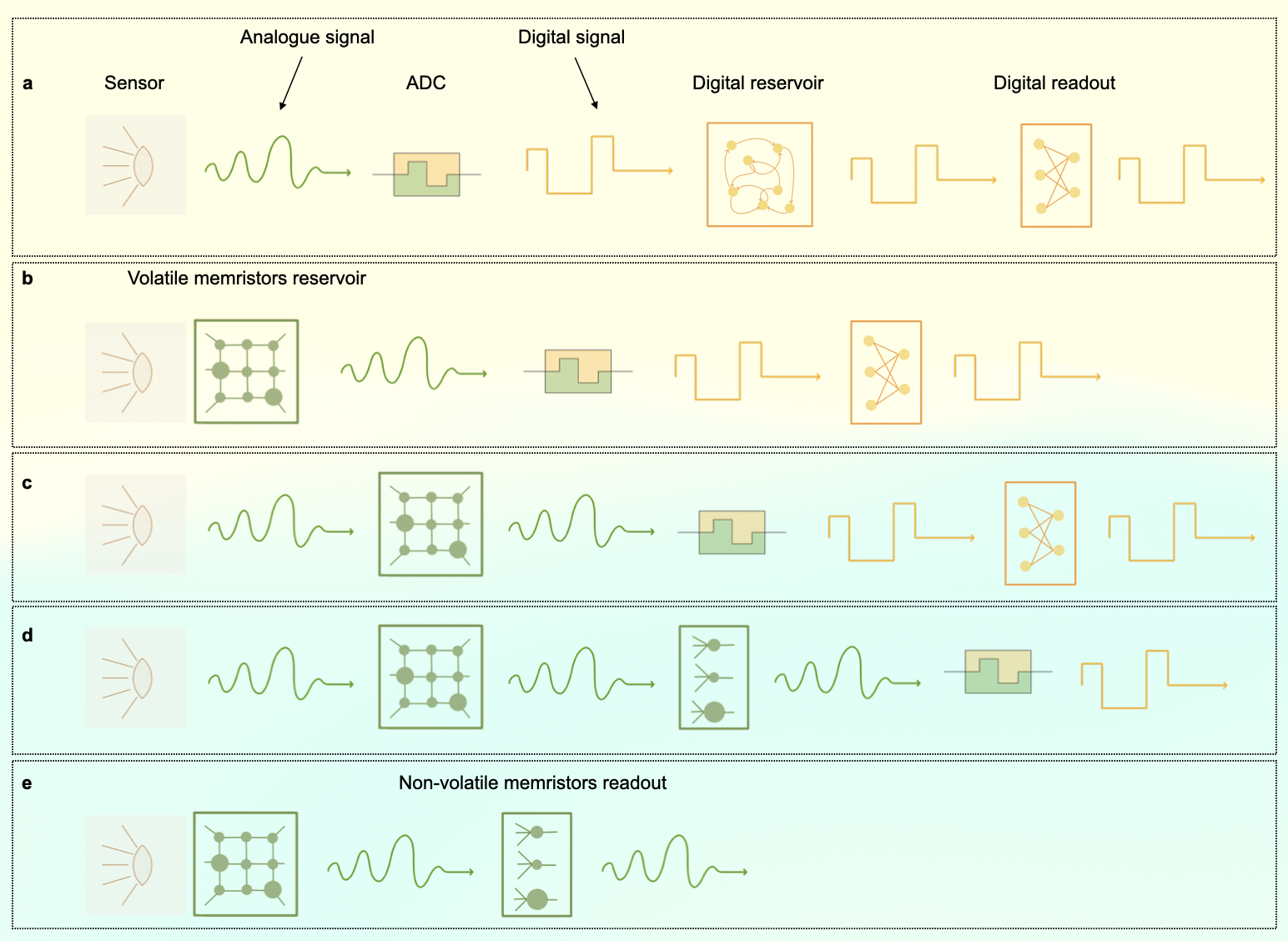
Figure 2. Classification and Implementation of Memristor-based Reservoir Computing Systems. (a) Fully Digital RC Systems. (b) Hybrid RC systems: Sensor-reservoir integrated systems. (c) Hybrid RC systems: Reservoir systems. (d) Hybrid RC systems: Reservoir-output integrated systems. (e) Fully Analog RC Systems.
Following the initial demonstration of memristor-based reservoir computing (RC) systems [34] various implementations of RC systems are broadly categorized into fully digital, hybrid, and fully analog designs due to differences in sensory, reservoir computational and read-out layers. Sensory and reservoir computational layers are able to be combined by ionic devices. Most read-out layers are digital processes which are more convenient to analyze and store.
Fully digital RC systems utilize all digital components after analogue-to-digital converters, as Fig. 2a. In light of constraints associated with large-scale integration and device testing conditions, some research initiatives have capitalized on the distinctive response curves characteristic of various memristors to parameterize the reservoir. By employing simulation techniques, these studies aim to validate the capabilities of their devices. This approach is instrumental in navigating the limitations posed by physical experimentation, thereby offering a viable pathway to assess and optimize the performance of memristive components within computing systems. These systems are adept at minimizing noise interference, offer enhanced operability at input and output interfaces and also facilitate the integration with other algorithmic processing methods, thereby enabling a synergistic improvement in computational efficiency [40].
Hybrid RC systems are differentiated into three subtypes: sensor-reservoir integrated systems, reservoir systems and reservoir-output integrated systems.
Sensor-reservoir integrated systems, as Fig. 2b, according to the unique physical properties of the target system, explored the use of sensors with memristive properties, facilitating a direct connection between the sensor and the reservoir. This approach allows external physical (analog) signals to be input directly into the reservoir without undergoing the conventional processing and regeneration by sensors, thereby streamlining system operations and increasing efficiency [41] .
Reservoir systems, as Fig. 2c, only utilize memristors as reservoir layers [14,42], providing a straightforward approach to leveraging memristor dynamics.
In reservoir-output integrated systems, as Fig. 2d, reservoir lawyers and output lawyers are combined. Volatile memristors are utilized to construct the reservoir layer, capitalizing on their dynamic response to electrical stimuli for the real-time processing of signals. In contrast, non-volatile memristors are selected for the readout layer, leveraging their ability to retain information over time without power, which is pivotal for the stable output of processed signals[13].
Fully analog RC systems represent a convergence of sensor, reservoir, and output in a singular, as Fig. 2d, unified system, facilitating direct signal transmission and processing across the network without the need for signal conversion or buffering. This design principle holds the promise of executing real-time spatiotemporal signal processing with lower power requirements and reduced hardware investment relative to digital or hybrid systems[43].
Discussion and Conclusion
Reservoir computing, originally developed to mitigate the constraints of early computational systems, remains a cornerstone in neuromorphic computing, particularly when utilizing memristor-based devices. The primary appeal of memristor-based Reservoir Computing (MRC) lies in its ability to use memristors’ inherent properties—such as non-linearity and memory retention—to simulate synaptic functions. However, the computational power of these systems is still limited, necessitating the use of reservoir computing to manage their capabilities. The readout layer, which outputs digital signals, remains a critical area for improvement, with advancements in precision largely dependent on the development of sophisticated algorithms.
The unique properties of memristors, including their ability to mimic synaptic plasticity, make them valuable for short-term memory functions. However, they are not yet capable of complex information processing akin to that found in biological systems. The operational characteristics of memristors are largely dictated by the materials used, rather than being designed by researchers, posing challenges in achieving precise and dynamic regulation of the reservoir’s internal nodes.
Ionic MRC takes this technology a step further by employing ionic transport mechanisms. This approach not only enhances dynamic behavior but also offers biocompatibility, making it suitable for integration into bio-compatible devices and medical applications. However, the practical application of ionic signals as direct mediators in biological interactions remains limited. The primary issue is the finite number of ions, which constrains device longevity and consistency in signal interactions. While ionic memristors can control the release of larger drug molecules, this function is more regulatory than communicative, limiting their application scope.
Despite these challenges, Ionic MRC presents numerous advantages, such as the ability to process sophisticated temporal patterns, making it highly effective in applications like speech recognition, predictive modeling, and complex signal processing. The simplified fabrication process, due to the non-requirement of extensive training for reservoir nodes, further enhances its commercial viability.
In conclusion, ionic MRC represents a significant breakthrough in the field of neuromorphic computing. The unique attributes of ionic memristors, including biocompatibility and enhanced dynamic responses, position them as promising components in a wide range of innovative applications. The potential for these systems to revolutionize fields such as medical technology and artificial intelligence is substantial, as they offer more efficient, adaptable, and integrated computing solutions.
Future research directions will likely focus on addressing current challenges, such as ensuring the long-term stability and reliability of ionic memristors, managing variability in their electrical properties, and developing scalable manufacturing processes. Additionally, exploring new material systems and device architectures could further enhance the performance of Ionic MRC systems. The biocompatibility of these devices opens up new avenues for hybrid bio-electronic systems, potentially enabling direct interfacing with living tissues for responsive and adaptive medical devices. Moreover, MRC systems show significant potential in future applications, including advanced communication networks, optical networks, IoT, green data centers, intelligent robotics, and AI-driven simulations [26].
Overall, while the technology is still in its developmental stages, the potential impact of Ionic MRC on various industries is immense. Interdisciplinary collaboration and continued innovation will be crucial in overcoming existing limitations and fully realizing the transformative potential of this emerging technology.
References
-
Jaeger, H.; Haas, H.Harnessing Nonlinearity: Predicting Chaotic Systems and Saving Energy in Wireless Communication. Science 2004, 304 (5667), 78–80. https://doi.org/10.1126/science.1091277.
-
Hossain, M. R.; Najem, J. S.; Rahman, T.; Hasan, M. S. Reservoir Computing System Using Biomolecular Memristor. In 2021 IEEE 21st International Conference on Nanotechnology (NANO); 2021; pp 116–119. https://doi.org/10.1109/NANO51122.2021.9514305.
-
Ding, G.; Chen, R.-S.; Xie, P.; Yang, B.; Shang, G.; Liu, Y.; Gao, L.; Mo, W.-A.; Zhou, K.; Han, S.-T.; Zhou, Y. Filament Engineering of Two-Dimensional h-BN for a Self-Power Mechano-Nociceptor System. Small 2022, 18 (16), 2200185. https://doi.org/10.1002/smll.202200185.
-
Lao, J.; Yan, M.; Tian, B.; Jiang, C.; Luo, C.; Xie, Z.; Zhu, Q.; Bao, Z.; Zhong, N.; Tang, X.; Sun, L.; Wu, G.; Wang, J.; Peng, H.; Chu, J.; Duan, C. Ultralow-Power Machine Vision with Self-Powered Sensor Reservoir. Adv. Sci. 2022, 9 (15), 2106092. https://doi.org/10.1002/advs.202106092.
-
Sun, L.; Wang, Z.; Jiang, J.; Kim, Y.; Joo, B.; Zheng, S.; Lee, S.; Yu, W. J.; Kong, B.-S.; Yang, H. In-Sensor Reservoir Computing for Language Learning via Two-Dimensional Memristors. Sci. Adv. 2021, 7 (20), eabg1455. https://doi.org/10.1126/sciadv.abg1455.
-
Moon, J.; Ma, W.; Shin, J. H.; Cai, F.; Du, C.; Lee, S. H.; Lu, W. D. Temporal Data Classification and Forecasting Using a Memristor-Based Reservoir Computing System. Nat. Electron. 2019, 2 (10), 480–487. https://doi.org/10.1038/s41928-019-0313-3.
-
Cai, H.; Ao, Z.; Tian, C.; Wu, Z.; Liu, H.; Tchieu, J.; Gu, M.; Mackie, K.; Guo, F. Brain Organoid Reservoir Computing for Artificial Intelligence. Nat. Electron. 2023, 6 (12), 1032–1039. https://doi.org/10.1038/s41928-023-01069-w.
-
Pei, M.; Zhu, Y.; Liu, S.; Cui, H.; Li, Y.; Yan, Y.; Li, Y.; Wan, C.; Wan, Q. Power-Efficient Multisensory Reservoir Computing Based on Zr-Doped HfO2 Memcapacitive Synapse Arrays. Adv. Mater. n/a (n/a), 2305609. https://doi.org/10.1002/adma.202305609.
-
Duport, F.; Schneider, B.; Smerieri, A.; Haelterman, M.; Massar, S. All-Optical Reservoir Computing. Opt. Express 2012, 20 (20), 22783–22795. https://doi.org/10.1364/OE.20.022783.
-
Vandoorne, K.; Mechet, P.; Van Vaerenbergh, T.; Fiers, M.; Morthier, G.; Verstraeten, D.; Schrauwen, B.; Dambre, J.; Bienstman, P. Experimental Demonstration of Reservoir Computing on a Silicon Photonics Chip. Nat. Commun. 2014, 5 (1), 3541. https://doi.org/10.1038/ncomms4541.
-
Sande, G. V. der; Brunner, D.; Soriano, M. C. Advances in Photonic Reservoir Computing. Nanophotonics 2017, 6 (3), 561–576. https://doi.org/10.1515/nanoph-2016-0132.
-
Müller, J.; Ballini, M.; Livi, P.; Chen, Y.; Radivojevic, M.; Shadmani, A.; Viswam, V.; Jones, I. L.; Fiscella, M.; Diggelmann, R.; Stettler, A.; Frey, U.; Bakkum, D. J.; Hierlemann, A. High-Resolution CMOS MEA Platform to Study Neurons at Subcellular, Cellular, and Network Levels. Lab. Chip 2015, 15 (13), 2767–2780. https://doi.org/10.1039/C5LC00133A.
-
Zhong, Y.; Tang, J.; Li, X.; Liang, X.; Liu, Z.; Li, Y.; Xi, Y.; Yao, P.; Hao, Z.; Gao, B.; Qian, H.; Wu, H. A Memristor-Based Analogue Reservoir Computing System for Real-Time and Power-Efficient Signal Processing. Nat. Electron. 2022, 5 (10), 672–681. https://doi.org/10.1038/s41928-022-00838-3.
-
Zhong, Y.; Tang, J.; Li, X.; Gao, B.; Qian, H.; Wu, H. Dynamic Memristor-Based Reservoir Computing for High-Efficiency Temporal Signal Processing. Nat. Commun. 2021, 12 (1), 408. https://doi.org/10.1038/s41467-020-20692-1.
-
Schaetti, N.; Salomon, M.; Couturier, R. Echo State Networks-Based Reservoir Computing for MNIST Handwritten Digits Recognition. In 2016 IEEE Intl Conference on Computational Science and Engineering (CSE) and IEEE Intl Conference on Embedded and Ubiquitous Computing (EUC) and 15th Intl Symposium on Distributed Computing and Applications for Business Engineering (DCABES); 2016; pp 484–491. https://doi.org/10.1109/CSE-EUC-DCABES.2016.229.
-
Matrone, G. M.; van Doremaele, E. R. W.; Surendran, A.; Laswick, Z.; Griggs, S.; Ye, G.; McCulloch, I.; Santoro, F.; Rivnay, J.; van de Burgt, Y. A Modular Organic Neuromorphic Spiking Circuit for Retina-Inspired Sensory Coding and Neurotransmitter-Mediated Neural Pathways. Nat. Commun. 2024, 15 (1), 2868. https://doi.org/10.1038/s41467-024-47226-3.
-
Laswick, Z.; Wu, X.; Surendran, A.; Zhou, Z.; Ji, X.; Matrone, G. M.; Leong, W. L.; Rivnay, J. Tunable Anti-Ambipolar Vertical Bilayer Organic Electrochemical Transistor Enable Neuromorphic Retinal Pathway. Nat. Commun. 2024, 15 (1), 6309. https://doi.org/10.1038/s41467-024-50496-6.
-
Cho, H.; Lee, I.; Jang, J.; Kim, J.-H.; Lee, H.; Park, S.; Wang, G. Real-Time Finger Motion Recognition Using Skin-Conformable Electronics. Nat. Electron. 2023. https://doi.org/10.1038/s41928-023-01012-z.
-
Shao L.; Zhao Y.; Liu Y. Organic Synaptic Transistors: The Evolutionary Path from Memory Cells to the Application of Artificial Neural Networks. https://doi.org/10.1002/adfm.202101951.
-
Dai, S.; Liu, X.; Liu, Y.; Xu, Y.; Zhang, J.; Wu, Y.; Cheng, P.; Xiong, L.; Huang, J. Emerging Iontronic Neural Devices for Neuromorphic Sensory Computing. Adv. Mater. 2023, 35 (39), 2300329. https://doi.org/10.1002/adma.202300329.
-
Zhang, H.-T.; Park, T. J.; Islam, A. N. M. N.; Tran, D. S. J.; Manna, S.; Wang, Q.; Mondal, S.; Yu, H.; Banik, S.; Cheng, S.; Zhou, H.; Gamage, S.; Mahapatra, S.; Zhu, Y.; Abate, Y.; Jiang, N.; Sankaranarayanan, S. K. R. S.; Sengupta, A.; Teuscher, C.; Ramanathan, S. Reconfigurable Perovskite Nickelate Electronics for Artificial Intelligence. Science 2022, 375 (6580), 533–539. https://doi.org/10.1126/science.abj7943.
-
Zhong, Y.; Tang, J.; Li, X.; Liang, X.; Liu, Z.; Li, Y.; Xi, Y.; Yao, P.; Hao, Z.; Gao, B.; Qian, H.; Wu, H. A Memristor-Based Analogue Reservoir Computing System for Real-Time and Power-Efficient Signal Processing. Nat. Electron. 2022, 5 (10), 672–681. https://doi.org/10.1038/s41928-022-00838-3.
-
Tanaka, G.; Yamane, T.; Héroux, J. B.; Nakane, R.; Kanazawa, N.; Takeda, S.; Numata, H.; Nakano, D.; Hirose, A. Recent Advances in Physical Reservoir Computing: A Review. Neural Netw. 2019, 115, 100–123. https://doi.org/10.1016/j.neunet.2019.03.005.
-
Jaeger, H. The “Echo State” Approach to Analysing and Training Recurrent Neural Networks-with an Erratum Note. Bonn Ger. Ger. Natl. Res. Cent. Inf. Technol. GMD Tech. Rep. 2001, 148 (34), 13.
-
Maass, W.; Natschläger, T.; Markram, H. Real-Time Computing Without Stable States: A New Framework for Neural Computation Based on Perturbations. Neural Comput. 2002, 14 (11), 2531–2560. https://doi.org/10.1162/089976602760407955.
-
Yan, M.; Huang, C.; Bienstman, P.; Tino, P.; Lin, W.; Sun, J. Emerging Opportunities and Challenges for the Future of Reservoir Computing. Nat. Commun. 2024, 15 (1), 2056. https://doi.org/10.1038/s41467-024-45187-1.
-
Canaday, D.; Pomerance, A.; Gauthier, D. J. Model-Free Control of Dynamical Systems with Deep Reservoir Computing. J. Phys. Complex. 2021, 2 (3), 035025. https://doi.org/10.1088/2632-072X/ac24f3.
-
Gallicchio, C.; Micheli, A. Deep Reservoir Computing. In Reservoir Computing: Theory, Physical Implementations, and Applications; Nakajima, K., Fischer, I., Eds.; Natural Computing Series; Springer: Singapore, 2021; pp 77–95. https://doi.org/10.1007/978-981-13-1687-6_4.
-
Ghosh, S.; Opala, A.; Matuszewski, M.; Paterek, T.; Liew, T. C. H. Quantum Reservoir Processing. Npj Quantum Inf. 2019, 5 (1), 1–6. https://doi.org/10.1038/s41534-019-0149-8.
-
Chang, M.-F.; Chiu, P. Energy Efficient Systems Using Resistive Memory Devices. 2014, 79–115. https://doi.org/10.1007/978-1-4419-9551-3_4.
-
Pal, S.; Ranjan, N. S. Design of Non-Volatile SRAM Cell Using Memristor. In Information Systems Design and Intelligent Applications; Satapathy, S. C., Mandal, J. K., Udgata, S. K., Bhateja, V., Eds.; Springer India: New Delhi, 2016; pp 175–183. https://doi.org/10.1007/978-81-322-2757-1_19.
-
Cao, J.; Zhang, X.; Cheng, H.; Qiu, J.; Liu, X.; Wang, M.; Liu, Q. Emerging Dynamic Memristors for Neuromorphic Reservoir Computing. Nanoscale 2022, 14 (2), 289–298. https://doi.org/10.1039/D1NR06680C.
-
3D Reservoir Computing with High Area Efficiency (5.12 TOPS/mm2) Implemented by 3D Dynamic Memristor Array for Temporal Signal Processing | IEEE Conference Publication | IEEE Xplore. https://ieeexplore.ieee.org/document/9830310 (accessed 2024-07-23).
-
Kulkarni, M. S.; Teuscher, C. Memristor-Based Reservoir Computing. In Proceedings of the 2012 IEEE/ACM International Symposium on Nanoscale Architectures; NANOARCH ’12; Association for Computing Machinery: New York, NY, USA, 2012; pp 226–232. https://doi.org/10.1145/2765491.2765531.
-
Lilak, S.; Woods, W.; Scharnhorst, K.; Dunham, C.; Teuscher, C.; Stieg, A. Z.; Gimzewski, J. K. Spoken Digit Classification by In-Materio Reservoir Computing With Neuromorphic Atomic Switch Networks. Front. Nanotechnol. 2021, 3. https://doi.org/10.3389/fnano.2021.675792.
-
Usami, Y.; van de Ven, B.; Mathew, D. G.; Chen, T.; Kotooka, T.; Kawashima, Y.; Tanaka, Y.; Otsuka, Y.; Ohoyama, H.; Tamukoh, H.; Tanaka, H.; van der Wiel, W. G.; Matsumoto, T. In-Materio Reservoir Computing in a Sulfonated Polyaniline Network. Adv. Mater. 2021, 33 (48), 2102688. https://doi.org/10.1002/adma.202102688.
-
Yao, P.; Wu, H.; Gao, B.; Tang, J.; Zhang, Q.; Zhang, W.; Yang, J. J.; Qian, H. Fully Hardware-Implemented Memristor Convolutional Neural Network. Nature 2020, 577 (7792), 641–646. https://doi.org/10.1038/s41586-020-1942-4.
-
Cucchi, M.; Gruener, C.; Petrauskas, L.; Steiner, P.; Tseng, H.; Fischer, A.; Penkovsky, B.; Matthus, C.; Birkholz, P.; Kleemann, H.; Leo, K. Reservoir Computing with Biocompatible Organic Electrochemical Networks for Brain-Inspired Biosignal Classification. Sci. Adv. 2021.
-
Liu, Z.; Tang, J.; Gao, B.; Yao, P.; Li, X.; Liu, D.; Zhou, Y.; Qian, H.; Hong, B.; Wu, H. Neural Signal Analysis with Memristor Arrays towards High-Efficiency Brain-Machine Interfaces. Nat. Commun. 2020, 11 (1), 4234. https://doi.org/10.1038/s41467-020-18105-4.
-
Köster, F.; Patel, D.; Wikner, A.; Jaurigue, L.; Lüdge, K. Data-Informed Reservoir Computing for Efficient Time-Series Prediction. Chaos Interdiscip. J. Nonlinear Sci. 2023, 33 (7), 073109. https://doi.org/10.1063/5.0152311.
-
Liu, K.; Zhang, T.; Dang, B.; Bao, L.; Xu, L.; Cheng, C.; Yang, Z.; Huang, R.; Yang, Y. An Optoelectronic Synapse Based on α-In2Se3 with Controllable Temporal Dynamics for Multimode and Multiscale Reservoir Computing. Nat. Electron. 2022, 5 (11), 761–773. https://doi.org/10.1038/s41928-022-00847-2.
-
Hassan, A. M.; Li, H. H.; Chen, Y. Hardware Implementation of Echo State Networks Using Memristor Double Crossbar Arrays. In 2017 International Joint Conference on Neural Networks (IJCNN); 2017; pp 2171–2177. https://doi.org/10.1109/IJCNN.2017.7966118.
-
Zhang, Z.; Zhao, X.; Zhang, X.; Hou, X.; Ma, X.; Tang, S.; Zhang, Y.; Xu, G.; Liu, Q.; Long, S. In-Sensor Reservoir Computing System for Latent Fingerprint Recognition with Deep Ultraviolet Photo-Synapses and Memristor Array. Nat. Commun. 2022, 13 (1), 6590. https://doi.org/10.1038/s41467-022-34230-8.